Course Overview
Status
Applications open in October
Location
Somerset House, Strand, London WC2R 1LA & Vernon Square Kings Cross, London WC1X 9EP
Duration
12 months, full-time
Awarding body
University of London
Intake
12 students per year
Are you fascinated by Buddhist Heritage? Do you want to deepen your understanding of its materiality and explore interdisciplinary scholarship surrounding it?
Affiliated with the Robert H. N. Ho Family Foundation Centre for Buddhist Art and Conservation at the Courtauld Institute, this MA programme is unique in its concept, content, and structure and harnesses the combined perspectives of art history and conservation. This interdisciplinary programme expands the ways in which Buddhist heritage is researched and cared for in order to build new knowledge as well as critical thinking and collaborative skills in the next generation of art historians, conservators, heritage and museum professionals.
You’ll gain an understanding of Buddhist heritage — both tangible and intangible — through the study of diverse objects and sites from the Buddhist world, in collections and in situ, spanning wide geographies, cultures, and temporal landscapes. You’ll learn about current topics in the research, preservation, and protection of Buddhist heritage and the economic, socio-political, and environmental contexts in which they exist. Students will also be introduced to the ethical and sustainable challenges of these pursuits from both a theoretical and practical vantage point.
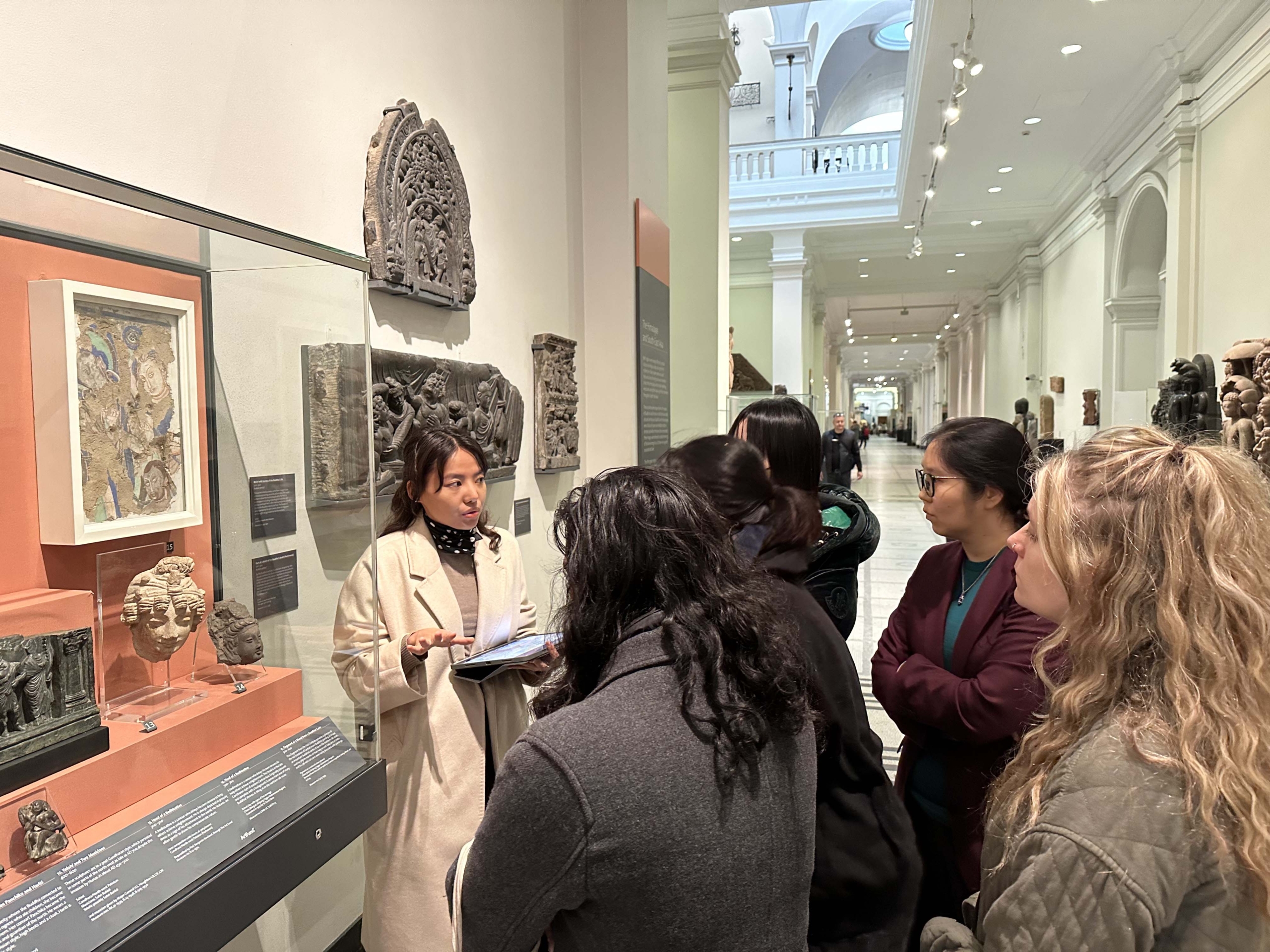
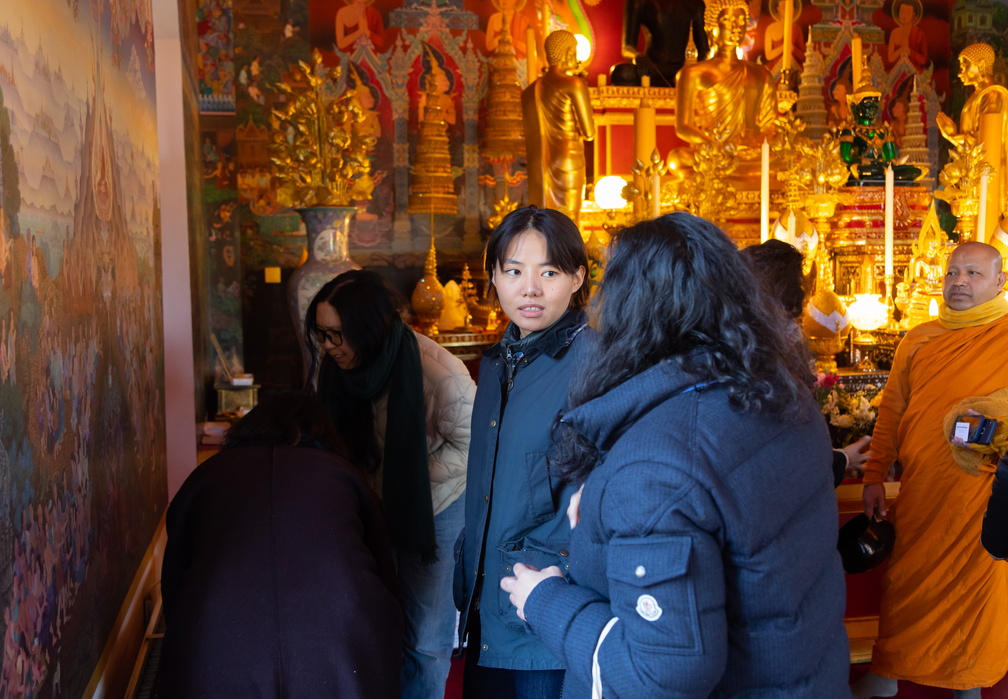
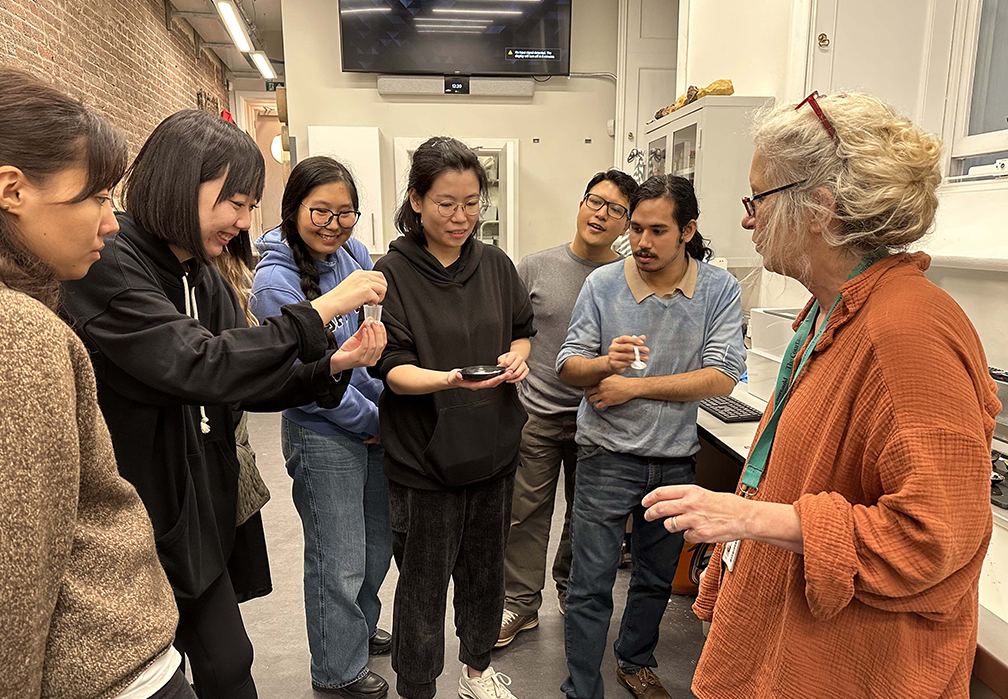
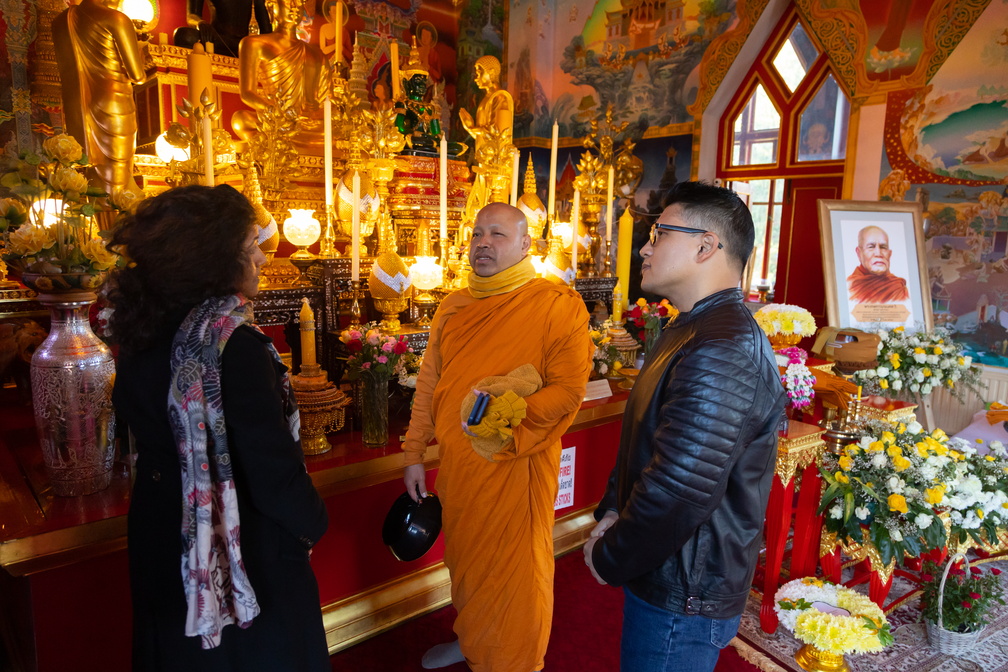
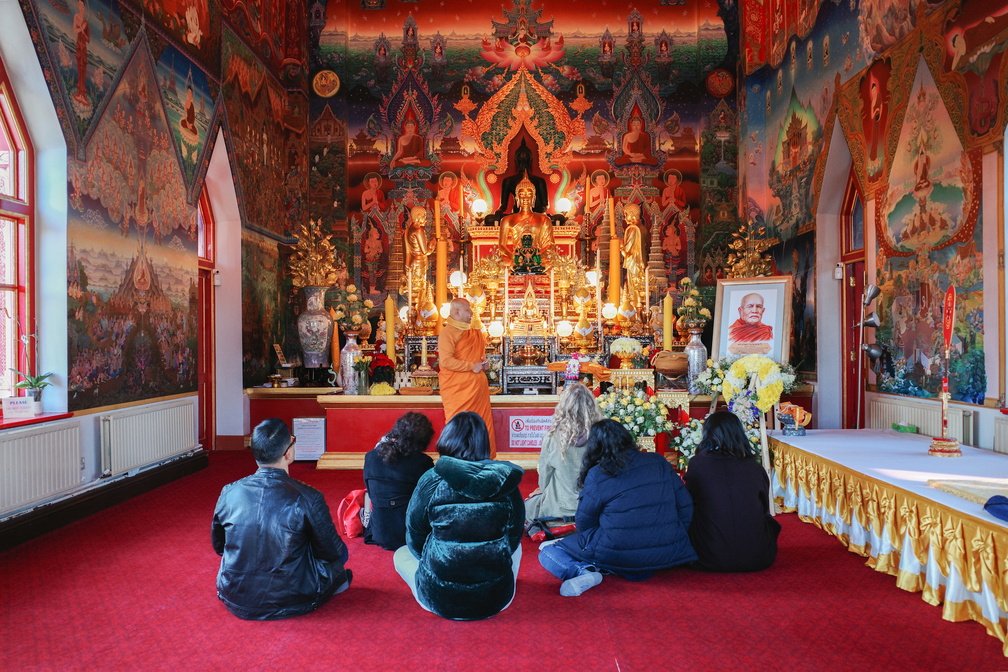
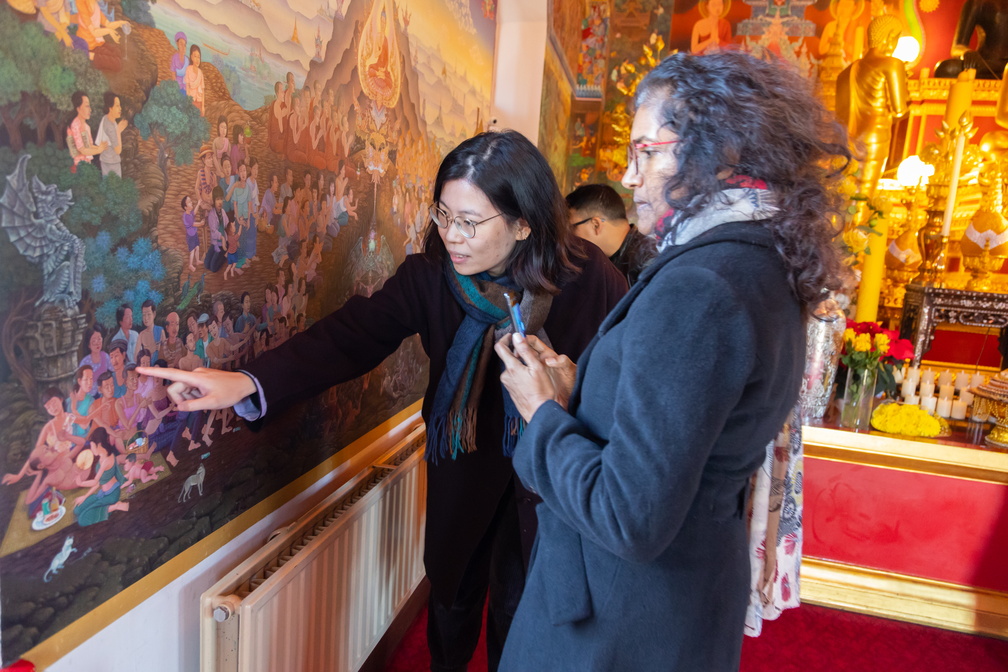
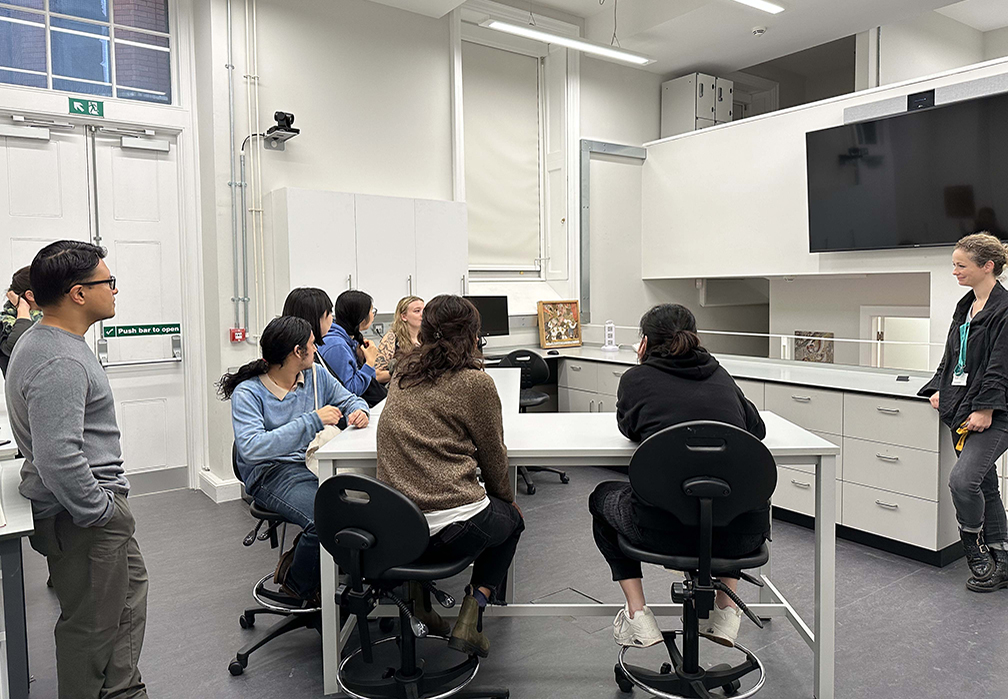
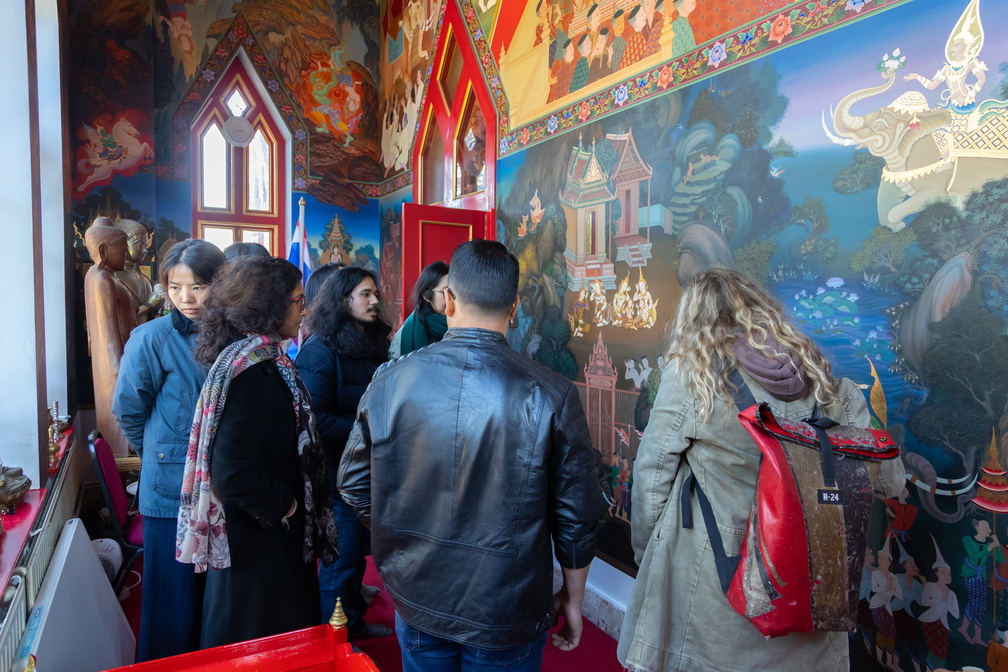
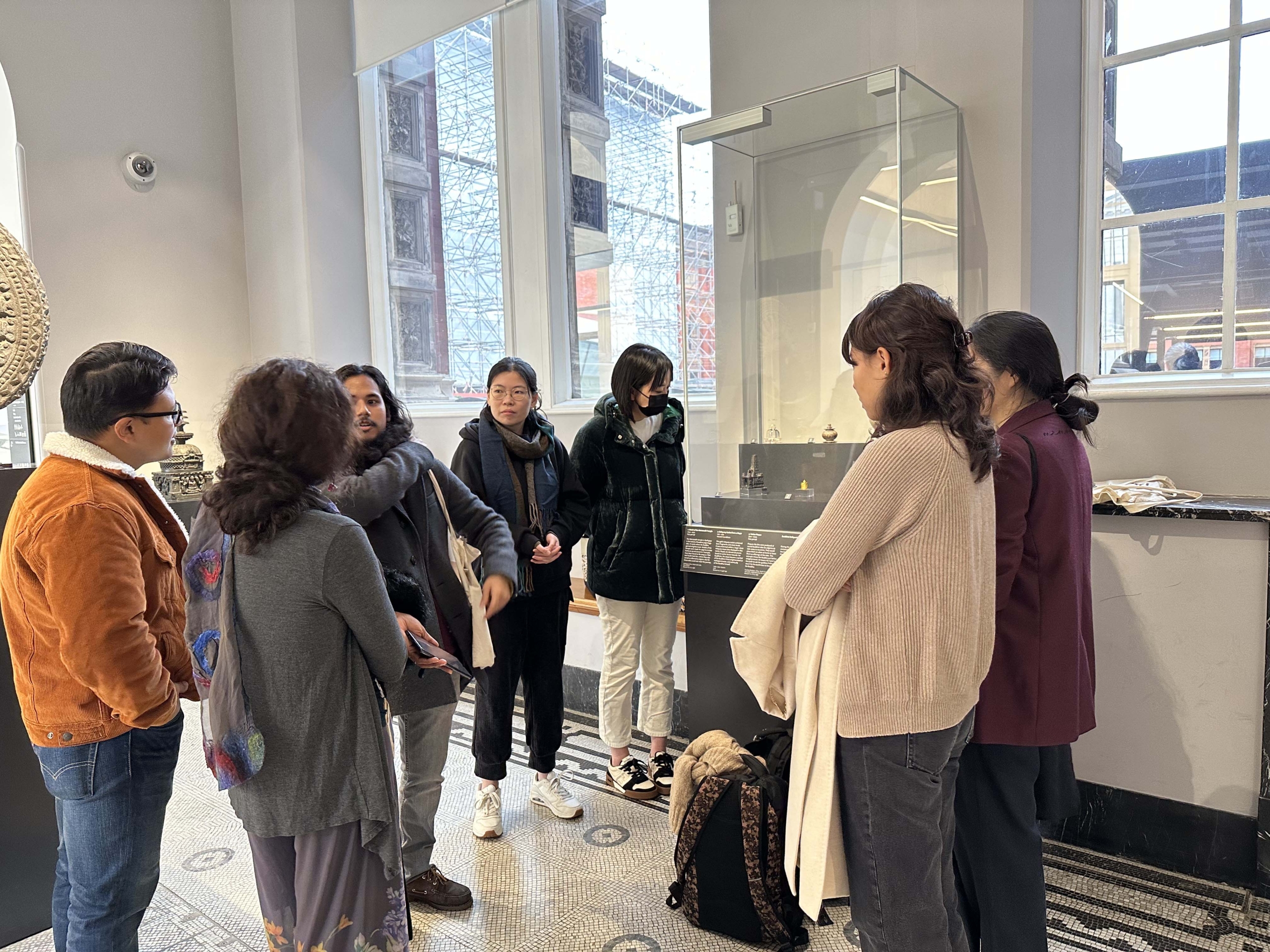
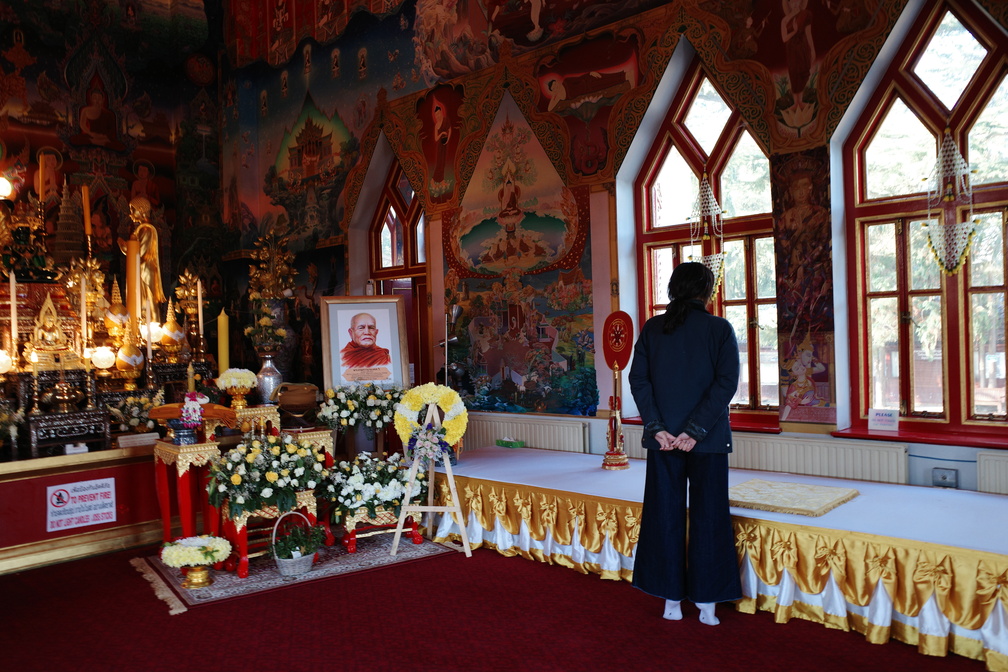
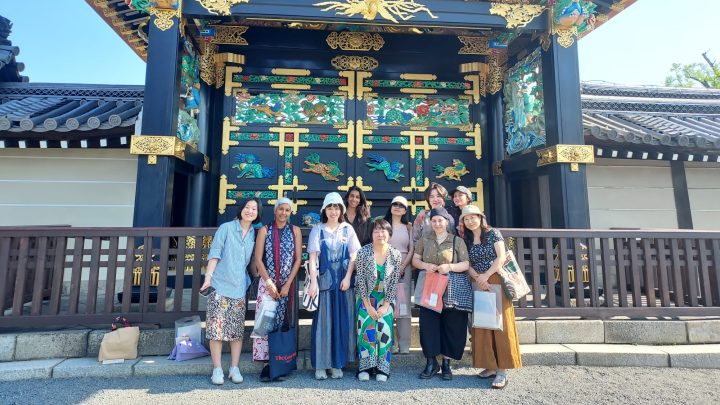
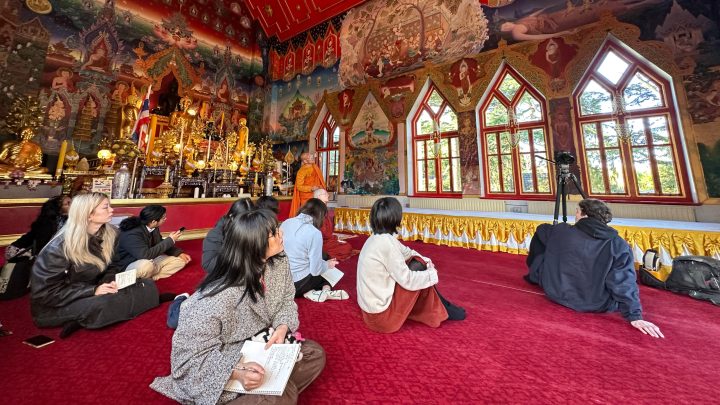
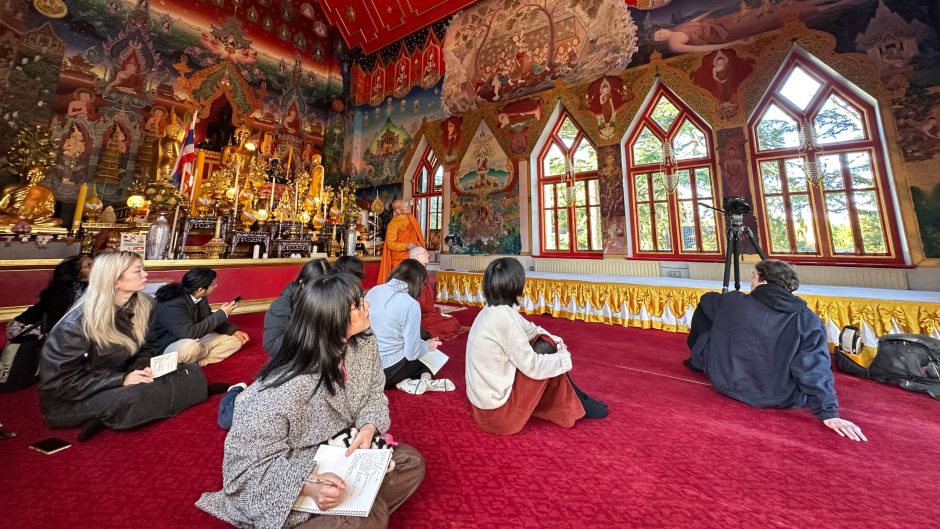
The degree is taught by leading specialists in conservation and Buddhist art history and brings in diverse voices from related fields and religious communities. The degree is exceptional for its small class size and individualised teaching. Buddhist heritage is explored both in the classroom and in the field and is taught by a wide range of scholars including art historians, conservators, Buddhologists, curators, archaeologists, scientists, heritage professionals, and the Buddhist sangha to create a rich learning environment. Highlighting experiential learning, students get the opportunity to experiment with materials and the making of replicas of Buddhist objects, as well as gain firsthand experience with Buddhist heritage through sit visits and an extensive study trip. Students have special access to museums, temples, and archaeological sites in the UK and overseas, and exclusive object study sessions and behind-the-scenes tours of conservation studios and scientific labs.
The Courtauld Institute MA provides students with outstanding tailored support and supervision to help you realise your full academic potential and to flourish in a meaningful career. A graduate of the Courtauld recognizes art history, conservation, and curating as inclusive, interdisciplinary, trans-historical, and global practices. This MA programme also serves to prepare students for further specialist education in art history, conservation, curating, heritage studies, and for roles in museums or within the cultural heritage sector.
Teaching and programme structure
MA Art History and Conservation of Buddhist Heritage is taught by leading specialists from the Department of Conservation and Department of Art History and delivered in lectures, workshops, research-based seminars, and site visits. It is structured in four research-led modules taught over two semesters, and concludes with an independent research project during the summer.
- In the first semester, students will take two foundational modules, Conservation in a Buddhist Context, and Buddhist Art Worlds.
- Teaching is then integrated into a single module in the second semester, delivering an interdisciplinary approach to the appreciation and preservation of Buddhist heritage.
- A year-long module on research skills will provide teachings on necessary research methods that prepare students for undertaking a 10,000-word MA dissertation during the summer.
Throughout the yearlong programme, students will receive academic support.
Experiential learning is an important component of this program that introduces students to a rich body of Buddhist heritage through lab-based practical sessions and site visits to UK based collections as well as the opportunity of a study trip to Asia to develop an appreciation for living heritage sites, to meet professionals and religious communities, and to provide firsthand experience of conservation and management challenges.
Learning outcomes include providing students with a specialised knowledge of diverse Buddhist heritage along with analytical, research, and writing skills, and research site visit experiences both in the UK and in Asia; approaches to conservation and an understanding of the ethical, technical, and administrative contexts, philosophical underpinnings, and decision-making processes in the preservation of Buddhist heritage. The broader learning outcomes for this course will provide transferable skills that have wider applicability beyond just the Buddhist context to other religious and spiritual cultures and traditions.
Please note that this is subject to change. Applicants will be informed if there are any changes to the programme.
Assessment
The formal assessment of MA Art History and Conservation of Buddhist Heritage is based on coursework and a research dissertation.
Programme outcomes
Upon completion of the MA Art History and Conservation of Buddhist Heritage, you will have:
- Critically evaluate the historical context and history of Buddhist heritage in its various religious, social, cultural, and political contexts
- Assess the preservation and protection of Buddhist heritage within an ethical and sustainable framework that takes into account historical approaches, continuing use, conflicting conservation approaches, and the role of stakeholders including religious communities
- Construct an argument in a structured and effective manner both verbally and in writing and supported by relevant evidence
- Demonstrate project management skills (including, where relevant, the necessary accompanying digital skills) through the undertaking of an independent research project on an aspect of Buddhist heritage
Careers and employability
MA Art History and Conservation of Buddhist Heritage degree will provide you with the ability to integrate, present and contextualise research related to the history of Buddhist Heritage and its conservation and effectively summarise research and use it to support an argument made in a small-group or team setting. The programme is designed to allow you to pursue further specialist training in the heritage sector, such as conservation, art history, curating, or site-management. Graduates of this MA programme have gone on to study various Conservation programmes, pursue PhDs, and occupy leading roles in collections and museums.
Students from the programme will join an international network of Courtauld alumni who work across the cultural sector and benefit from the friendships, support, and mentorship available within that community.
Entry requirements
UK qualifications: Students will normally have achieved a good 2.1 in their Bachelor’s degree.
Overseas qualification: Equivalent to a good 2.1 in a UK first degree (e.g. US applicants should have a cumulative GPA of 3.3 or above). Country-specific qualifications can be found here.
English language requirements: If your first language is not English, we require proof of English language proficiency – please see the English Language Requirements page.
We welcome applicants with other forms of academic and relevant professional experience. Please note that applicants may be invited to interview on a case-by-case basis.
Applications: Please see How to Apply page for information.
Scholarships for this programme are funded by the Robert H. N. Ho Family Foundation Centre for Buddhist Art and Conservation.
Fees and funding
Information about tuition fees can be found here.
Financial support for your studies:
Courtauld Institute of Art Scholarships: Generously funded scholarships for this programme are available from the Robert H. N. Ho Family Foundation Centre at the Courtauld.
Alumni Loyalty Scheme: This scheme is open to any graduate of the Courtauld Institute admitted to a taught postgraduate programme of study. Recipients will receive a 10% loyalty discount off their tuition fee for the duration of the course.
Please note students on this programme are not eligible to apply for Master’s Loan by the UK government.
Associated Programme costs: As well as the General Associated Programme Costs, the MA Buddhist Heritage may include an international study trip, typically 1-2 weeks. Travel and subsistence costs will be covered by the programme, and students will be informed of international travel as soon as practical. As this is typically an international trip, students will be required to arrange travel visas.
Resources
The Robert H. N. Ho Family Foundation Centre for Buddhist Art and Conservation is closely linked with the Conservation Department at the Courtauld Institute. Both the Ho Centre and the Conservation Department periodically hold conferences and public lectures in association with the Research Forum and museums and other institutions from outside the Courtauld, and benefit from contributions by Visiting Conservators. The department also acts as a centre for conservation and art-historical advice to outside conservators, scholars and the public.
The Conservation Department is equipped with extensive scientific laboratories and state-of-the-art facilities for the analysis of paintings and wall paintings. Both portable and bench-top equipment at the Department are available for teaching and research. The department houses major collections of easel painting samples, X-radiographs, wall painting fragments and wall painting samples from around the world, the archive of the Survey of Historic Wall Paintings in the British Isles.
Students benefit from access to a wide range of research facilities at both the Institute and other parts of the University of London, as well as other major libraries and collections in London. Close collaboration with curators, librarians, scientists and conservators in the national museums and heritage organisations offers further opportunities for training and research.
Support
To support you through the degree, we offer:
Wellbeing support: We have a dedicated Wellbeing team, with counsellors and advisors.
Academic skills training: The academic skills tutor offers group and one-to-one classes to help you to develop the skills and confidence you need to succeed on the degree. We also have two Royal Literary Fund fellows who will help you with your writing skills – concentrating on how to structure and improve your writing.
Careers advice: You can access bespoke, one-to-one career guidance throughout your studies. The Courtauld Careers Service offers advice and support on exploring career and further study options, finding internships, enhancing employability, understanding and navigating the jobs and self-employment market, and making successful applications. This service is available to all graduates for up to two years after graduation.
MA Art History and Conservation of Buddhist Heritage Virtual Open Day 2025
Studying at the Courtauld Institute: an overview
Image gallery